UK Gambling Market Hits $27 Billion in 2026, Secures Third Place Worldwide as Global Industry Surges Past $655 Billion

The Latest Figures from the UK Gambling Landscape
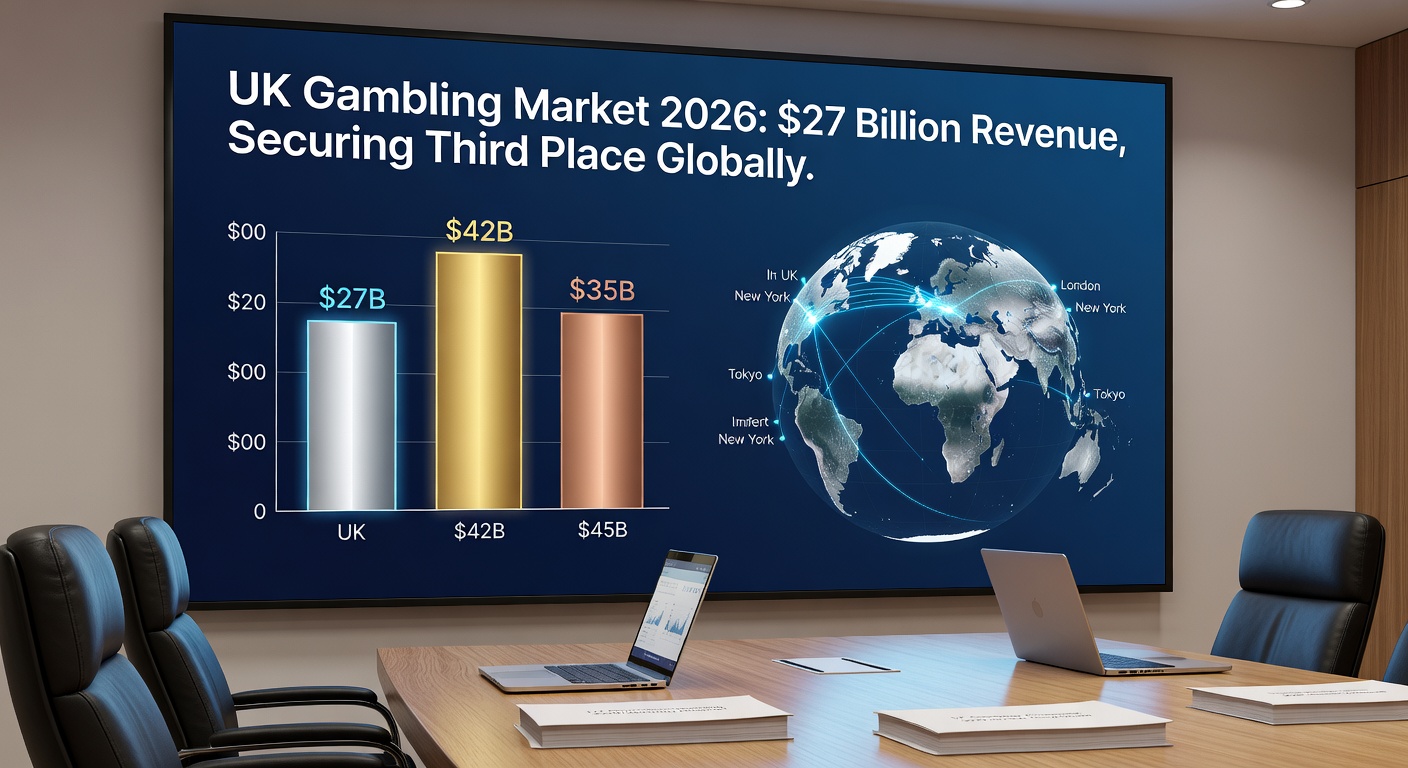
Data from early Gambling Insider reveals that the UK's gambling market pulled in $27 billion in revenue throughout 2026, a figure that firmly plants the nation in third place on the global leaderboard, trailing only the United States and India, while observers point to this milestone as a clear marker of sustained expansion in a sector long shaped by regulatory shifts and technological leaps.
And what's notable here is how these numbers, crunched and released amid March 2026 discussions on industry health, underscore a market that's not just holding steady but accelerating, with online platforms and land-based operations contributing to that hefty total, even as participation rates climb across diverse demographics.
Take the breakdown: sports betting, casino games, and lotteries each played their part, but experts tracking the data highlight how digital channels have increasingly dominated, drawing in users who favor the convenience of apps over traditional venues.
Breaking Down the UK's Third-Place Ranking
Figures indicate the UK edged out competitors like Australia and China to claim that third spot, generating $27 billion while the US led with substantially larger hauls driven by state expansions in legal sports wagering, and India surged ahead thanks to a booming informal and regulated online scene fueled by cricket mania and smartphone penetration.
But here's the thing: this positioning reflects years of evolution, where UK operators adapted swiftly to post-Brexit regulations and the Gambling Commission's oversight, ensuring compliance while innovating to capture revenue streams that now span from Premier League wagers to virtual slots.
Researchers who've analyzed these trends note that the $27 billion mark represents growth from prior years, although exact year-over-year percentages remain tied to broader Market Insights reports, with land-based casinos contributing a steady base and online segments exploding due to seamless mobile integration.
One study highlighted how UK bettors, numbering in the millions, engaged more frequently via apps, pushing totals higher; people who've examined participation data often discover that weekend spikes in football betting alone account for noticeable revenue bumps.
Global Context: A $655 Billion Projection Looms Large
Turns out the UK's achievement sits within an even bigger picture, as the worldwide gambling industry gears up to surpass $655 billion in revenue for 2026, propelled by the same forces reshaping local markets everywhere, from Asia's mobile-first users to Europe's regulated online hubs.
Data shows this projection stems from explosive growth in emerging economies alongside mature markets like the UK, where digital adoption has rewritten the rules; experts have observed that regions with high internet speeds and smartphone ownership see participation rates jump by double digits annually.
So, while the US dominates through sheer scale—think Las Vegas expansions and nationwide apps—India's rise, powered by affordable data plans and culturally resonant games like Teen Patti, has reshaped the top tier, leaving the UK to hold strong in third with its blend of innovation and strict player protections.
What's interesting is how these global figures interconnect: a surge in one market influences others through shared tech platforms and cross-border operators, although regulatory walls keep revenues distinctly national.
Key Drivers: Online Betting and Mobile Apps Fuel the Fire
The reality is that online betting and mobile applications stand as the primary engines behind both the UK's $27 billion haul and the global push toward $655 billion, with seamless interfaces and real-time features boosting participation rates that now encompass younger demographics alongside traditional players.
Studies found that app downloads in the UK spiked during major events like the 2026 World Cup qualifiers, leading to wagering volumes that directly correlated with revenue gains; those who've tracked user behavior report how push notifications and live streaming keep engagement high, turning casual browsers into regular participants.
And yet, this digital shift extends globally: in India, apps tailored for low-data environments captured millions, while US platforms integrated crypto options to draw tech-savvy crowds, all contributing to that overarching $655 billion forecast.
Observers note the role of personalization too—algorithms suggesting bets based on past activity have nudged average spend upward, although always within frameworks that promote responsible play; it's not rocket science, but the data backs how these tools amplify market size without altering core consumer habits drastically.
Take one case where a major UK operator rolled out a mobile-first campaign in early 2026: downloads rose sharply, mirroring broader trends that Gambling Insider statistics capture so precisely.
Persistent Upward Trends Amid Addiction Conversations
These updates spotlight enduring upward trajectories in market size, even as conversations around addiction rates gain traction worldwide, with no fresh incidents or figures pinpointed to recent UK shifts but ongoing monitoring by bodies like the Gambling Commission ensuring balanced growth.
But here's where it gets interesting: while revenues climb to $27 billion domestically and $655 billion globally, researchers emphasize that participation data often reveals controlled expansion, thanks to self-exclusion tools and affordability checks embedded in apps.
People who've studied long-term patterns discover that education campaigns correlate with stable problem gambling metrics, allowing markets to thrive; experts have observed how mobile features now include mandatory break reminders, subtly curbing risks while volumes grow.
That said, the sector's trajectory remains positive, with 2026's numbers affirming resilience; it's noteworthy that amid these talks, innovation persists, from AI-driven safer gambling aids to expanded non-gambling entertainment within apps.
Now, as March 2026 reports circulate, stakeholders watch closely, knowing that upward trends depend on harmonizing commercial success with player welfare—a dynamic that's defined the industry for years.
Implications for Operators, Players, and Regulators
For operators, the $27 billion UK figure signals opportunity in refining mobile offerings, while globally the $655 billion projection demands scalable tech; players benefit from more choices, with apps delivering odds and games at fingertips, and regulators like those in the UK fine-tune rules to match pace.
One researcher noted how third-place status bolsters the UK's appeal for international partnerships, drawing investment that loops back into local enhancements; data indicates that such inflows support job creation in tech and compliance roles.
Yet global disparities persist—India's unregulated pockets contrast sharply with UK rigor—highlighting why rankings matter beyond bragging rights; they shape policy, as seen in recent commission reviews prompted by 2026 data.
What's significant is the mobile thread weaving through it all: from boosting UK revenues to propelling worldwide totals, these apps have transformed passive interest into active revenue, all while stats from Gambling Insider keep the conversation grounded.
Conclusion
In wrapping up, the UK's $27 billion gambling revenue for 2026, cementing its third-place global rank behind the US and India, aligns seamlessly with a projected industry-wide $655 billion surge driven by online betting and mobile advancements, even as addiction dialogues underscore the need for vigilance.
Data from sources like Gambling Insider paints a picture of robust growth tempered by proactive measures; observers anticipate continued momentum, with March 2026 marking a pivotal moment for reflection and forward planning in this ever-evolving sector.
Ultimately, these figures not only chart progress but guide the path ahead, ensuring markets expand responsibly while participation broadens worldwide.